
gpt-image-2.5-flare: Strengths, Misses, When to Use It
gpt-image-2.5-flare measured: 11–50 s across five tiers, near-flat time on complex prompts, five of six realism checks passed, and when it is the right model.
Last updated: 2026-09-20
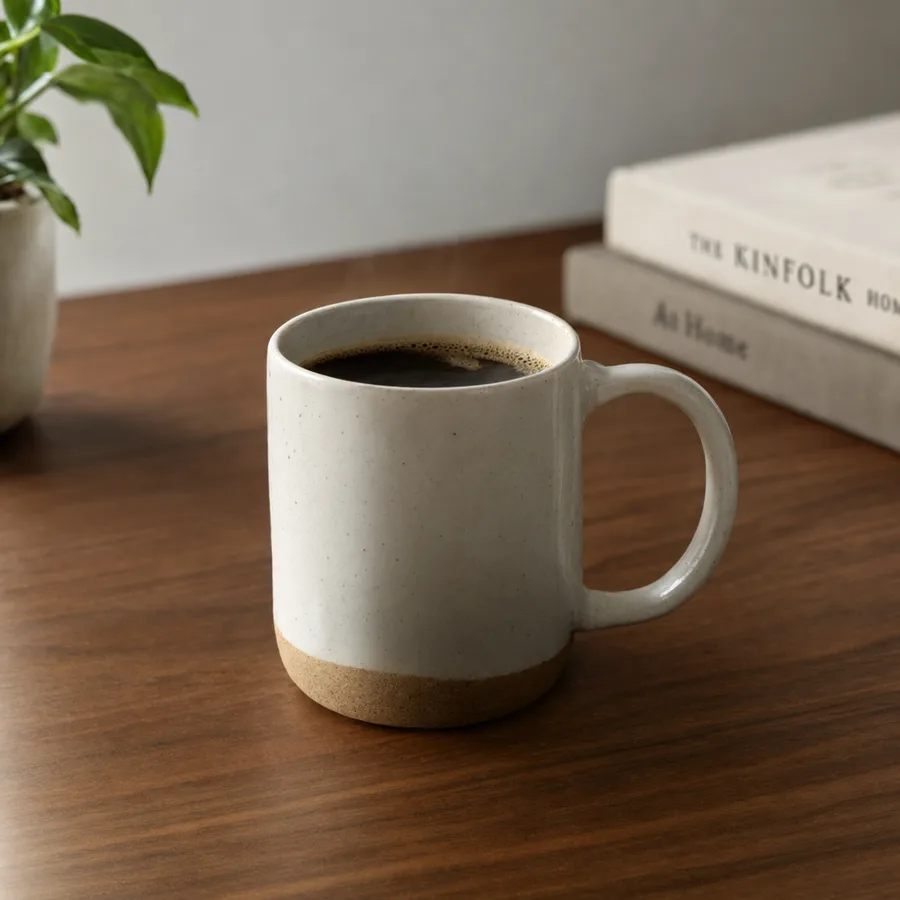
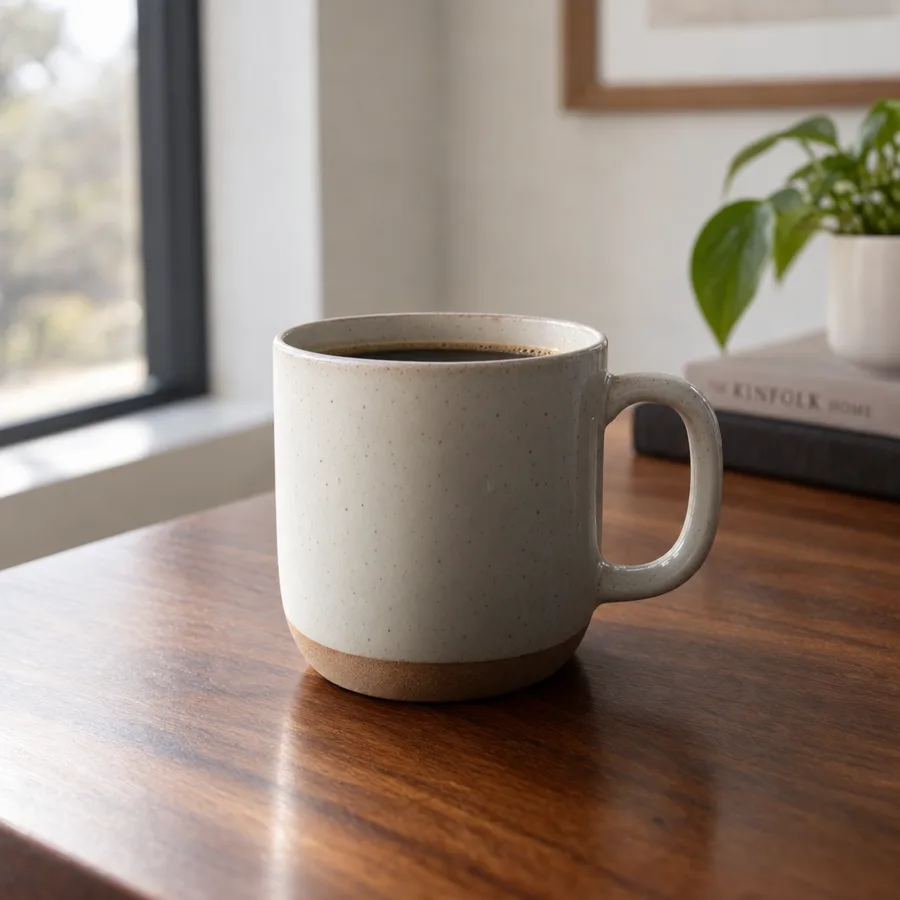
gpt-image-2.5-flare is the smaller of the two GPT Image 2.5 models, and OpenAI describes it in two words: small, speed-optimised. That undersells it. In our first round of controlled runs Flare was the model that kept a near-constant generation time whatever we threw at it, passed a realism check the larger model failed, and cost exactly the same per image. Here is what we measured, what it is for, and where it lost.
In numbers
Same prompt, same size, same tier on both models, one run per cell, 2026-09-12:
| What we measured | Flare | Sunburst, for reference |
|---|---|---|
Product shot at low / medium / high | 11 / 10 / 20 s | 13 / 16 / 35 s |
Product shot at xhigh / max | 26 / 50 s | 54 / 113 s |
Four different high prompts, slowest minus fastest | 5 s (20–25 s) | 12 s (35–47 s) |
| Output tokens per image, every tier | identical | identical |
| LM Arena text-to-image, 2026-09-12 | 1399 | 1421 |
| Realism checklist, cafe portrait | 5 of 6 | 4 of 6 |
| 16-frame character sheet, consistency | drifted | held |
What Flare is good at
Predictable time. Across a product shot, a busy bookshop interior, a 16-frame sprite sheet and a portrait with six deliberate checkpoints — all at high — Flare returned in 20, 25, 24 and 20 seconds. Adding ten exclusion lines to the bookshop prompt did not move it: 25 s both times. If you are building something where a person waits on the result, a model whose latency does not depend on how much you asked for is worth a great deal. Sunburst, on the same prompts, ranged from 35 to 47 s.
High tiers without the long wait. The gap between the two models widens with the tier, from 2 s at low to 63 s at max (full curve on the speed page). Flare's advantage is therefore concentrated exactly where images are most expensive and slowest: xhigh and max, where it returned in 26 s and 50 s against 54 s and 113 s.
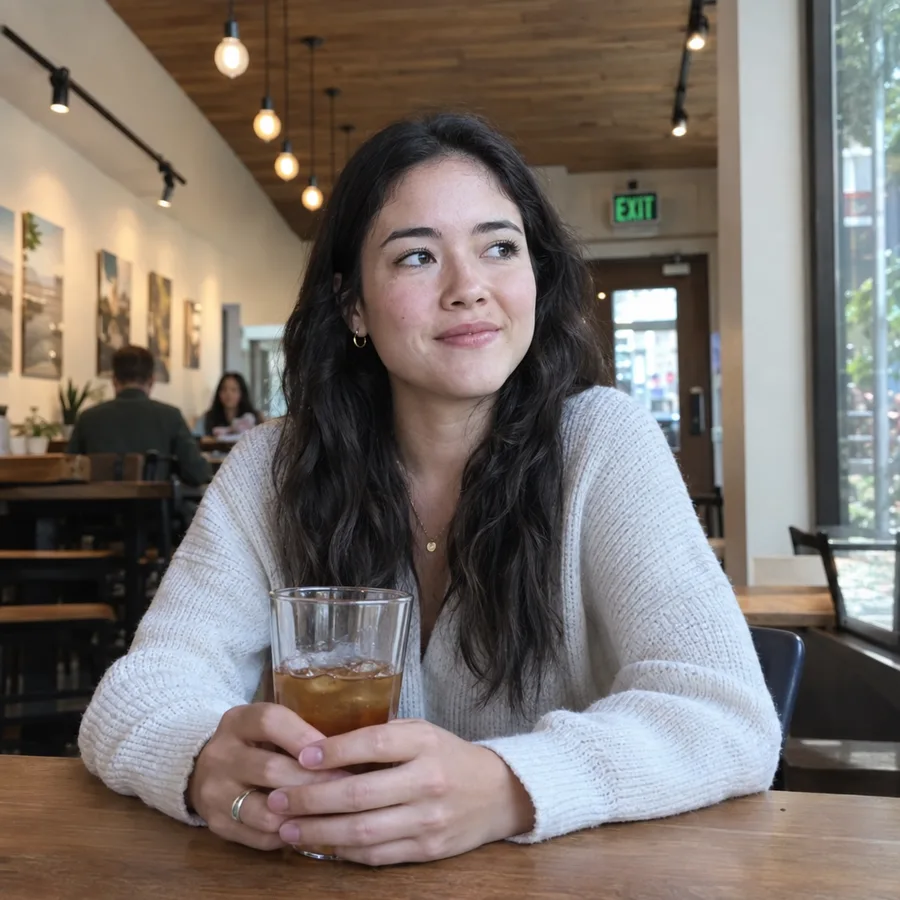
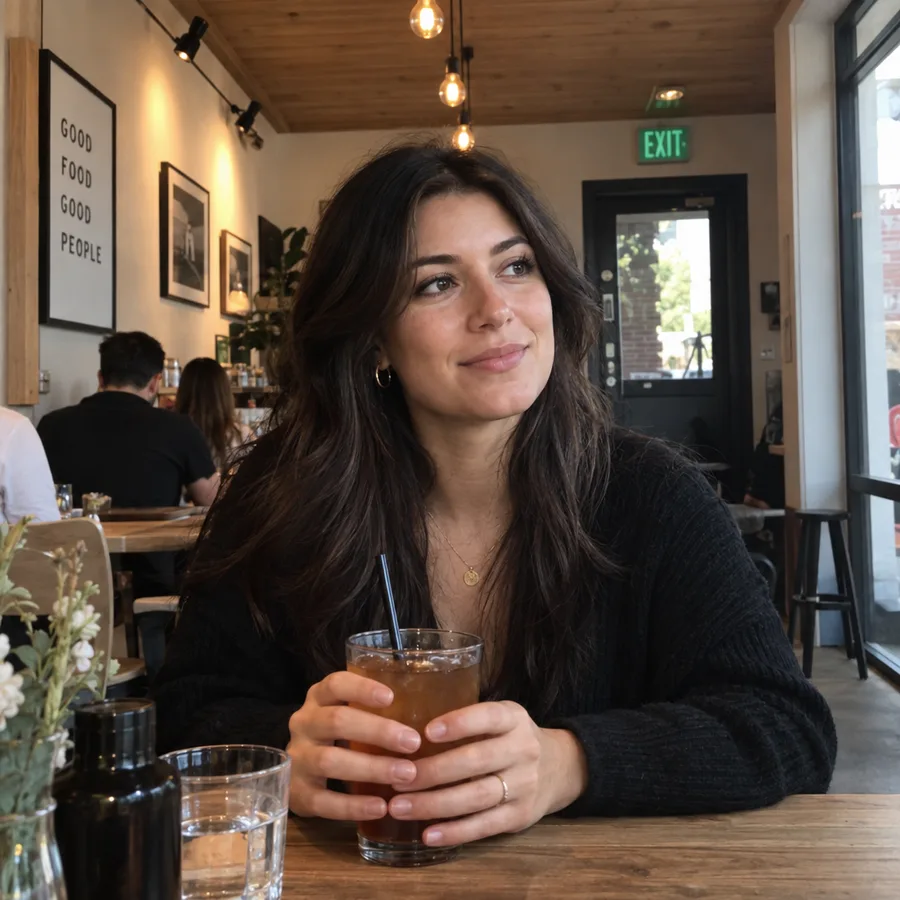
Scene logic. The most-upvoted "tell" in Reddit's big realism thread was an EXIT sign not mounted directly above its door. We wrote a cafe portrait that asks for exactly that, and Flare put the sign where it belongs; Sunburst put it beside the door. Flare passed five of the six checks — sign placement, ceiling material, liquid level, light direction, hands — and shared the one miss, uneven pendant spacing, with Sunburst. The slower model is not better at everything.
Iteration. Every candidate you throw away is cheaper in time on Flare and identical in money. Composition, lighting, casting, layout — the phases where you generate ten to keep one — are Flare's natural home.
Where Flare lost
Character consistency across frames. On the 16-frame sprite sheet, Flare's sword changed colour between frames and the character changed size. Sunburst held armour, cape and belt buckle across all 16. For any asset where one character must stay the same — sheets, storyboards, series — generate the reference on Sunburst and use Flare for the volume; see consistent characters.
Fine detail and in-image text. In the cafe portrait Sunburst produced better skin texture and hair, and a poster you can read; Flare's wall carried abstract art instead. When the brief is dense with text or the subject is a face at close range, expect Sunburst to win the comparison.
A 22-point gap on the leaderboard. LM Arena's text-to-image ranking on 2026-09-12 put Sunburst at 1421 and Flare at 1399. That is a real but narrow difference; Flare itself sits 18 points above gpt-image-2 at 1381. Leaderboards move, so check the current standings before quoting them.
When to choose Flare
- You run
high,xhighormaxand a user is waiting for the image. - You are iterating and will generate many candidates before choosing one.
- Your prompts vary a lot in complexity and you need latency that does not.
gpt-image-2quality was already enough for you. OpenAI's guidance is to start with Flare in that case and see whether the latency gain is real for your prompts.- You are running
lowormediumand want the fastest possible turnaround — but note the margin there is 2–6 seconds, and Sunburst costs the same.
When not to
- One character has to stay identical across a series (make the reference on Sunburst).
- The image carries text that has to be legible, or the subject is a close-up face.
- You have a complex, many-element scene and the first result from Flare misses relationships you asked for. OpenAI's own advice for that case is to start with Sunburst, then test Flare on the same prompt and switch only if quality still passes.
How to use it
- Model string:
gpt-image-2.5-flare. It takes the same prompt, size and quality parameters as Sunburst, so an A/B needs no rewriting. - Set the tier explicitly —
low,medium,high,xhighormax— rather thanauto, especially when comparing with Sunburst. - Do not send
input_fidelity; it belongs to GPT Image 1 and 1.5 and is not accepted by 2 or 2.5. Coming from either, see the migration guide. - For consistency-critical work, attach a reference image and give it a role rather than relying on a text description; Flare drifted without one.
Try it on your own prompt in the studio: it reports seconds and output tokens for each image, and you can run the same prompt on Sunburst with one click to see the difference on your material rather than ours.
FAQ
Is Flare lower quality than Sunburst? On the leaderboard, by 22 points. In our tests it lost on consistency and fine detail and won on one scene-logic check. "Lower" is per task, not global; score your own prompts.
How much faster is Flare?
Between 1.18× and 2.26× depending on tier, in our text-to-image runs. In absolute terms: 2 s faster at low, 63 s faster at max.
Does Flare cost less? No. Both models are listed at the same token prices and returned identical output tokens for the same request at every tier. Details on the cost page.
Should I use Flare for everything at low quality?
There is little reason to: at low Sunburst took 13 s to Flare's 11 s for the same price. The case for Flare strengthens with every tier above that.
Sources
- OpenAI Devs launch post — model positioning
- OpenAI image prompting guide — model-choice guidance, parameters
- LM Arena scores via Hacker News — 2026-09-12 snapshot
- Our runs: 2026-09-12, 1024×1024, one run per cell; all images unedited