
GPT Image 2.5 Prompt Rules: What Four Sources Agree On
Seven GPT Image 2.5 prompt rules four independent guides agree on, the one rule all four share, and the claims we tested on Flare and Sunburst.
Last updated: 2026-09-13
There is no shortage of GPT Image 2.5 prompt guides; most are one person's list. We took four that were written independently — OpenAI's own image-prompting guide, a Reddit post that reverse-engineered 278 of OpenAI's launch images, a widely shared Chinese digest of the official guide, and a three-part Reddit guide with its own tests — and lined them up. Whatever at least two of them say independently, we treat as a rule. Whatever only one says, we test.
Everything below applies to Flare and Sunburst equally: both models take the identical prompt.
Seven rules with at least two independent sources
| Rule | OpenAI guide | 278-image reverse | Chinese digest | Reddit guide |
|---|---|---|---|---|
| Name the deliverable first — product photo, ad, diagram, UI mockup, slide — so the model picks the right composition defaults | ✅ | ✅ | ✅ | |
| Put in-image text in quotes, give it a position and a typeface, and add "no other text, logos or watermarks" | ✅ | ✅ | ✅ | |
| Write edits as two sentences: the one thing to change, then the list of what must not change | ✅ | ✅ | ✅ | ✅ |
| Change one variable per iteration and feed the previous output back in | ✅ | ✅ | ✅ | |
| Give every reference image a role and a scope — what it controls, which traits must survive | ✅ | ✅ | ✅ | |
| Style comes from concrete optics — lens, light, grain, palette — not adjectives | ✅ | ✅ | ||
| Constraints do not carry over between turns; restate them every time | ✅ | ✅ |
The one rule all four sources share
Editing is where GPT Image 2.5 rewards discipline most, and every source lands on the same shape:
Change only the white chair to a wooden chair. Keep the camera angle, composition, lighting, shadows, background and every other piece of furniture exactly as they are.
Sentence one is the change. Sentence two is the keep-list, and it should be longer than feels natural — in the reconstructed launch prompts the keep-lists run well past what most people write. Anything not on the list is fair game for reinterpretation, and repeated edits drift.
Claims with a single source — tested, not repeated
The 278-image reverse-engineering makes three claims nobody else makes. They are specific enough to test, so we started with the one that contradicts how most people prompt.
Claim: long exclusion lists make the output flat
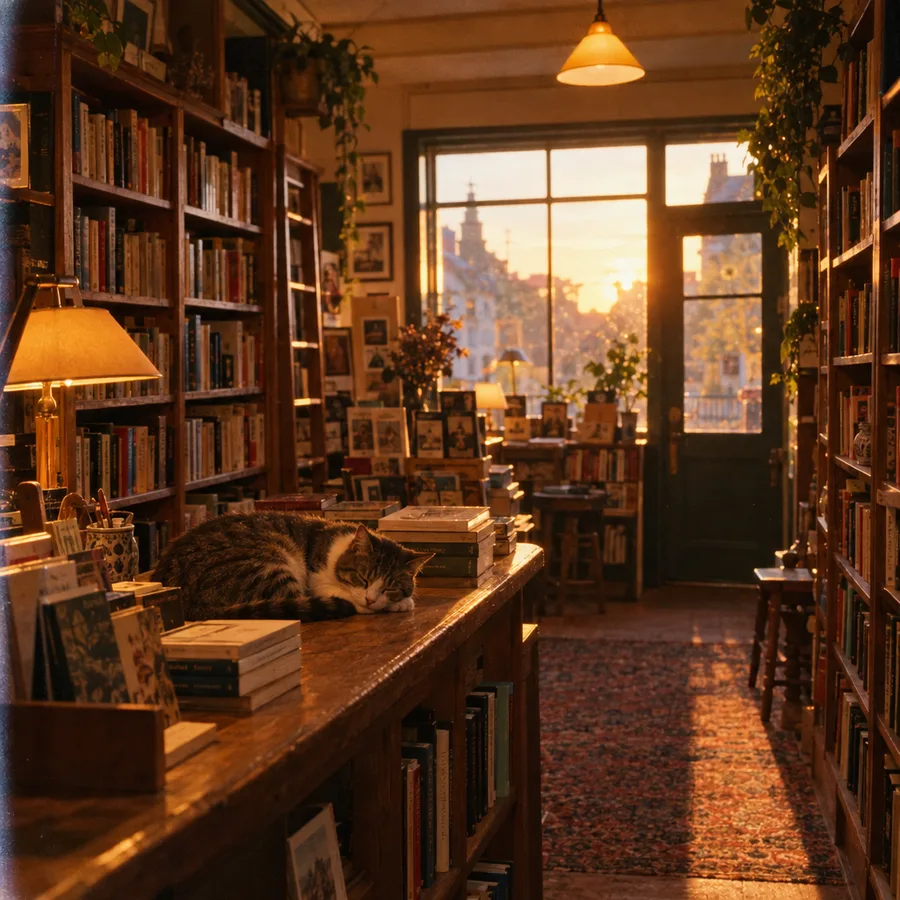
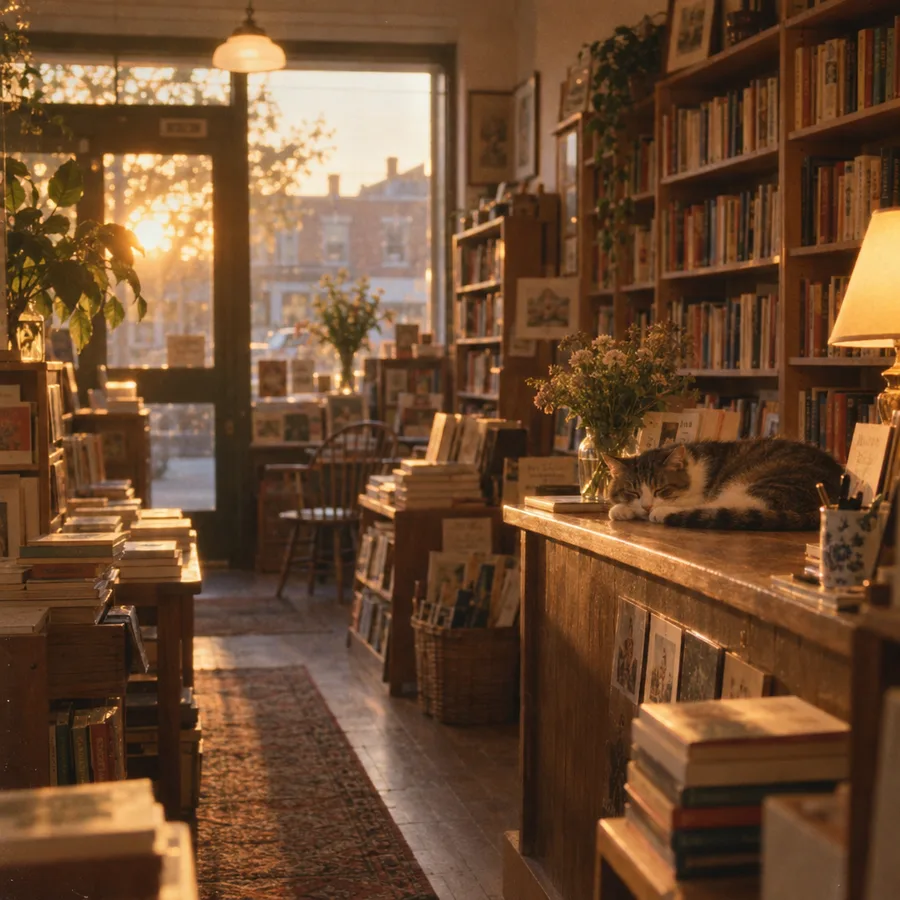
Same bookshop prompt, high quality, 1024×1024, both models. The only difference is the tail of the prompt: two "do not" lines, or ten.
Two exclusions:
A cozy independent bookshop interior at golden hour, warm tungsten light, wooden shelves, a cat asleep on the counter, shot on vintage film camera, subtle grain. Do not add any text or logos.
Ten exclusions — the same prompt, followed by: do not add people, modern electronics, plants, neon signs, reflections on the floor, a second cat, stairs, a ceiling fan, or posters on the walls.
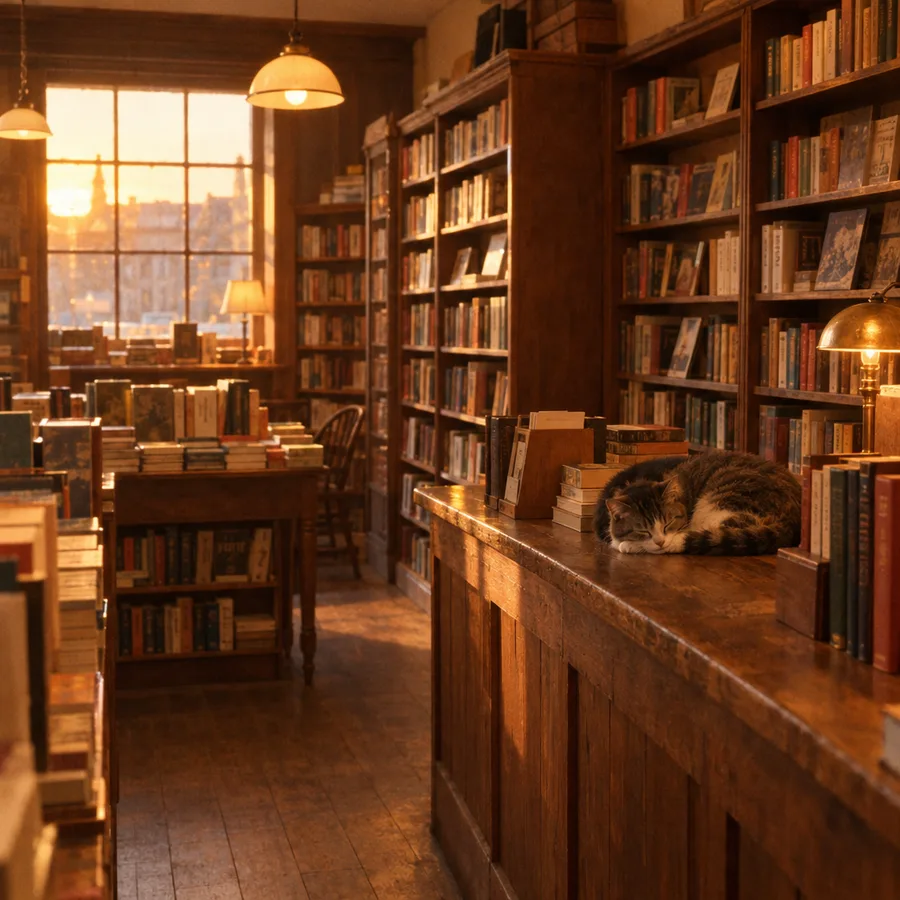
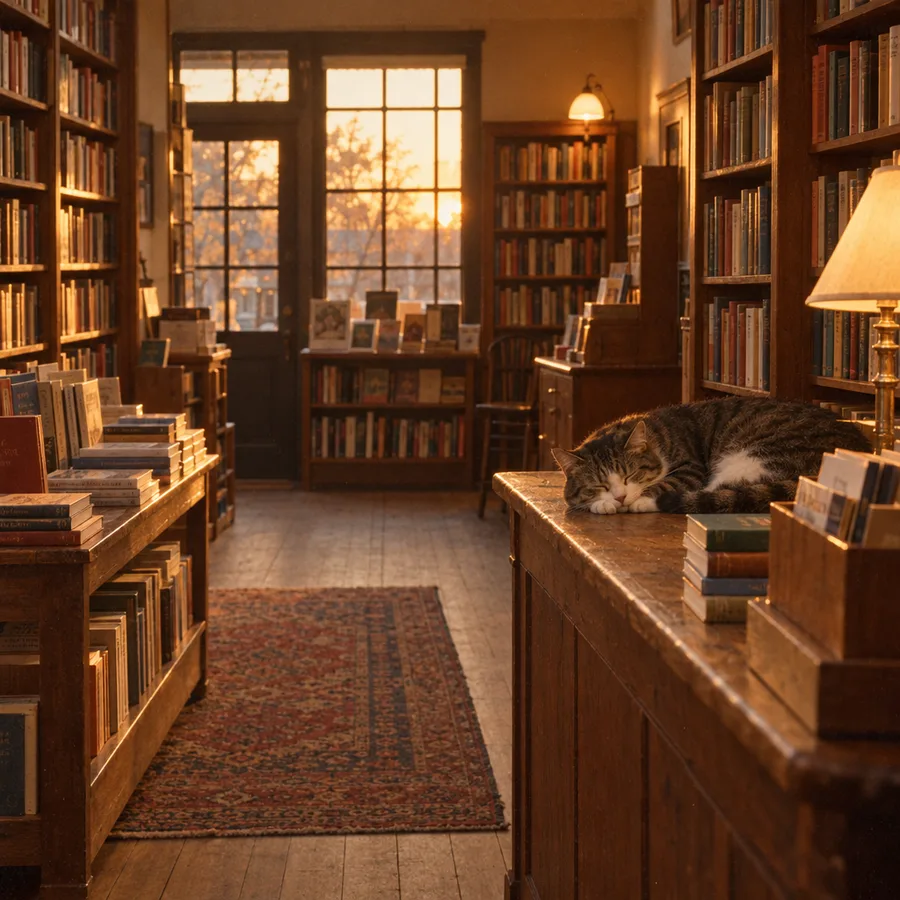
The claim holds — and the reason is more useful than the claim. The two-line version came back full of atmosphere: hanging plants, a rug, framed prints, a skyline through the window, golden light on the floor. The ten-line version is visibly emptier — bare boards, more shelving, no greenery, no prints — on both models.
Now look at what the ten lines banned: plants, floor reflections, posters. Those are the atmosphere. The model did not get dumber under constraint; it obeyed, and we had removed the warmth ourselves. So the operational rule is not "keep exclusions short" but:
Exclude only what would ruin the image. Every "do not add X" deletes a piece of the picture, so ask whether X appearing would actually be a problem before you write the line.
Timing footnote: the long list did not slow either model — Flare took 25 s both times, Sunburst 44 s and 40 s.
Claim: "cinematic" on its own does nothing
Not tested yet. It is cheap to test and we will; until then, treat "cinematic" as decoration and write the optics you mean.
Claim: strong prompts name two or three exclusions at most
Consistent with our result above, but our data cannot separate "few exclusions" from "the right exclusions". Untested as stated.
The tension worth an experiment
The same source says keep-lists in edits should be long, and exclusion lists in generation should be short. Those only conflict if they govern the same thing — and they don't:
- Generating: exclusions delete content. Keep them few and load-bearing.
- Editing: keep-lists protect content you already like. Make them long.
We have run the generation half (above). The editing half — short versus long keep-lists on the same base image, on both models — is the next experiment on this site.
A structure that survives a week of edits
Two independently written templates land on the same order. For general images, from the Chinese digest of the official guide:
purpose → subject → composition → style → light → materials → in-image text → what must not appear
For UI and layout work, the nine-section spec a public repository has used for more than two thousand prompts:
LAYOUT · PALETTE · TYPOGRAPHY · GEOMETRY · DEPTH · IMAGERY · SIGNATURE · MUST-AVOID · OUTPUT
Pick whichever you will still be able to edit next week; the format matters less than every section being present.
Parameters that are part of the prompt
- Set the quality tier explicitly —
low,medium,high,xhighormax. Never A/B the two models onauto. - Sizes must be multiples of 16 on both sides, at most 3:1, at most 3,840 px on any side, and 655,360–8,294,400 pixels in total.
- Do not send
input_fidelity— it belongs to GPT Image 1 and 1.5 and is not accepted by 2 or 2.5. Moving off those models? The migration guide lists everything else that changes. - Transparent output needs PNG or WebP, and you should inspect the alpha channel around hair, glass and shadows.
- For dense in-image text, raise size and tier together. A community tip we have not benchmarked, but consistent with how output tokens scale.
Flare or Sunburst for prompt work
Both take the same prompt, so the only question is where the extra time goes. Sunburst's time grows with prompt complexity — 35 s for a plain product shot, 44 s for the bookshop above, 47 s for a 16-frame sprite sheet — while Flare stayed within 20–25 s across all of them. Iterate on Flare, confirm on Sunburst. The speed page has the full table by tier.
Sources
- OpenAI image prompting guide
- 278 launch images reverse-engineered, r/PromptEngineering — reconstructions, not the original prompts
- Chinese digest of the official guide on X
- Reddit prompt guide, part 1 and part 3
- Nine-section UI spec repository
- Our runs:
high, 1024×1024, 2026-09-12, one run per cell; all four images above are unedited outputs.